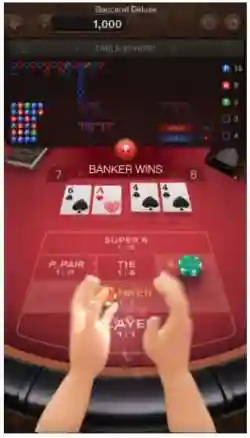
PG SOFT™ has released Baccarat Deluxe, which includes Super 6 and Traditional Baccarat versions. Baccarat is played with eight decks of cards, totaling 52 cards. The bead-filled game board has five levels and allows players to track the progress of the game, determine the target amount and size of each bet, and control the betting rhythm. Enabling the Squeeze feature simulates the action of squeezing a card to reveal it, immersing players in the game and creating a realistic sense of excitement!
Summary
For a quick overview of the summary table, please refer to the table below.
Parameter
Value
Return to Player (RTP)
Overall
98.94% (Traditional), 98.76% (Super Six)
Session Volatility
Low
Default Minimum Bet
EUR €1
Default Maximum Bet
EUR €500
Max Exposure (Simulated in 1 Billion Spins)
11x (Traditional), 12x (Super Six)
Owner, Developer
Pocket Games Soft (PG SOFT™)
Tested by
Gaming Associates
Supported Platforms
iOS, Android, HTML5, MacOS, Windows
Optimal Display Resolution
1080×2340 (Required aspect ratio 19.5:9)
Game Feature
You’re dealt a “natural” hand, and you win!
The Player and Banker each receive two cards, with a hand value displayed next to each card. Cards are dealt in the following order: Player, Banker, Player, Banker.
If the “Squeeze” feature is enabled, some of the cards dealt can be squeezed to reveal the cards.
Hand values can range anywhere from 0 to 9. They are calculated by adding the card values together and using only the last digit of the sum. If the Player and/or Banker’s hand value is a “natural” (hand value 8 or 9), both the Player and Banker stand, and no third card is dealt. Winnings are paid according to the “Payout” feature, and the game ends.
Baccarat Deluxe
Baccarat Deluxe (Traditional/Super 6) is played with eight standard 52-card decks. The theoretical return to player (RTP) for this game is 98.94% and 98.76%, respectively. This RTP represents the long-term theoretical payout for the game. RTP reflects the long-term statistical percentage of the total bet amount in the game that is paid out as winnings over time. RTP is calculated by dividing the total win amount by the total bet amount over multiple simulated rounds of play.
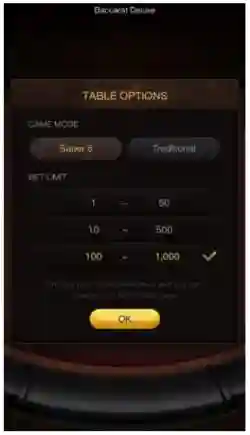
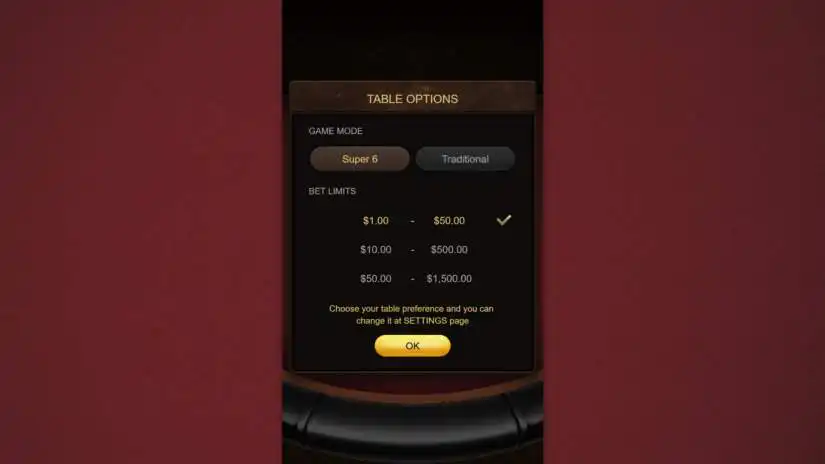
Splash Screen &bet Limit Selection Page. The main game starts when the splash screen disappears.
Betting Limits. Betting limits range from €1 to €50 for low-stakes players, from €10 to €500 for medium-stakes players, and from €100 to €1,000 for high-stakes players. Betting limits can be changed in SETTINGS.
How To Play
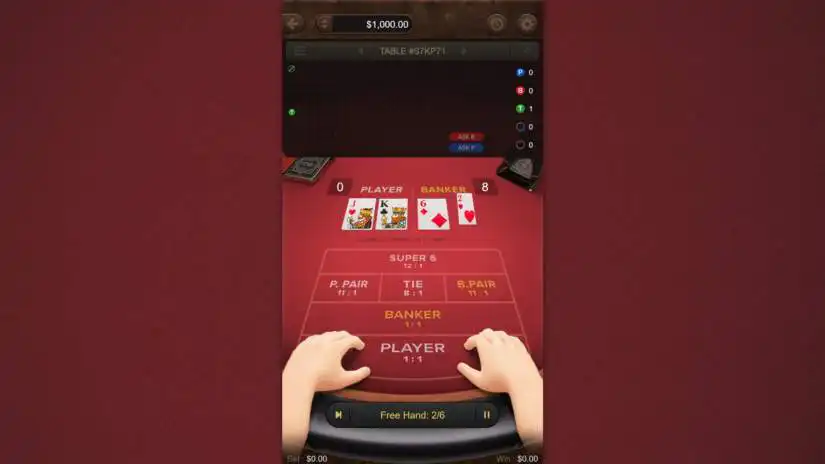
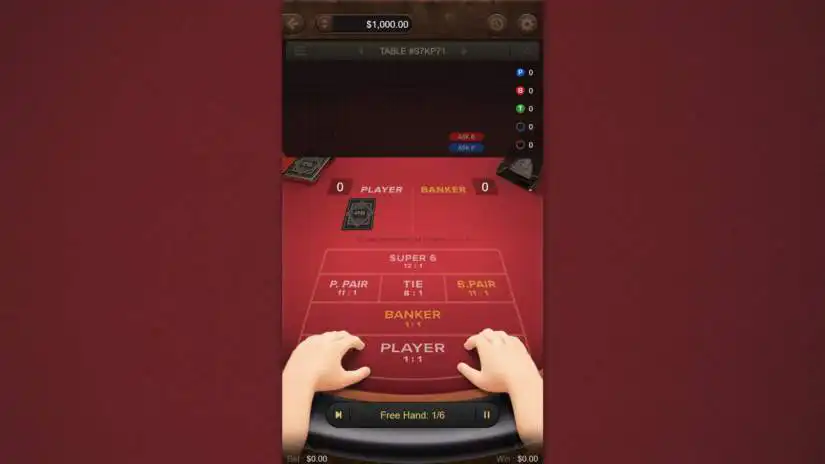
Click on the betting fields (Player, Banker, Tie, Pair of Players, Pair of Basemen, and Super 6) to set the bet amount on the desired field.
Click the “Pass” icon to begin the deal without placing a bet on any field. This can only be done if there are no bets on any field. No payout is made regardless of the outcome of the game.
Click the “Repeat” icon to place the previous bet and begin the deal.
Click the “Double” icon to place and double the previous bet and begin the deal.
Click the “Clear” icon to remove all bets from the betting field.
Click the “Deal” icon to begin the deal.
Shuffling
Click on the Start icon to begin shuffling the deck.
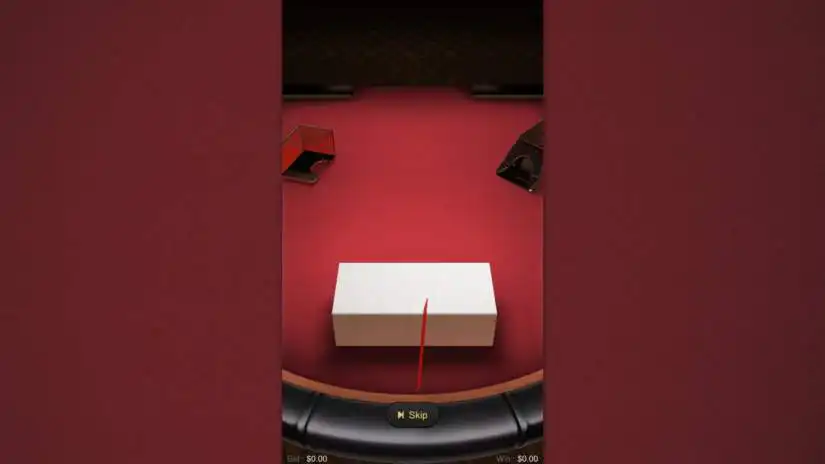
During the shuffle, click the “Skip” icon to skip the shuffle animation. All 8 decks are shuffled fairly and randomly.
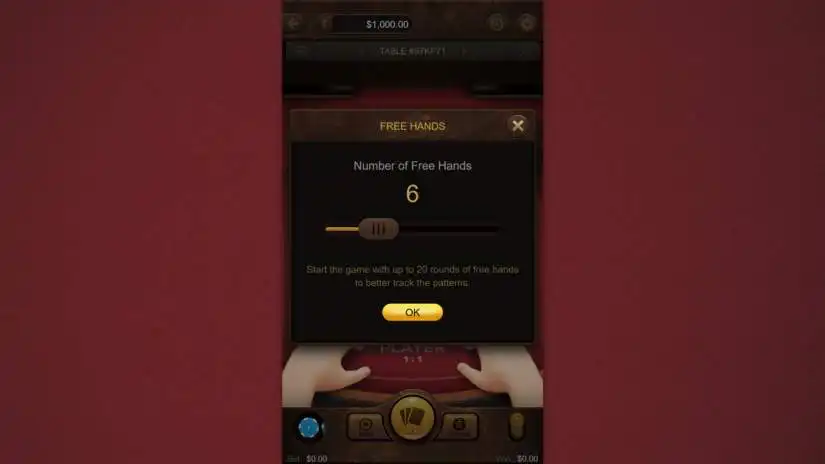
The deck is cut once, approximately 25% of the way through. The cut card is inserted approximately 25% of the way down the deck, after which the entire deck is placed in the shuffle tower. The first card is drawn, and its value indicates the number of cards to be burned and discarded from the top of the deck. After burning the card(s), select the number of free hands (from to ). Click the “OK” icon to begin the deal of the selected free hands. This does not require any wagering, and no payout is made after any free hand. The game can be resumed after all free hands have been played, or by clicking the “Skip” icon during any free hand.
Dealing
The Player and Banker each receive two cards, with the value of each card displayed next to it. The cards are dealt in the following order: Player, Banker, Player, Banker.
If the “Squeeze” feature is enabled, some of the cards dealt can be squeezed to reveal the cards. Hand values can range anywhere from 0 to 9. They are calculated by summing the card values and using only the last digit of the sum. If the Player and/or Banker have a “natural” hand (hand value of 8 or 9), both the Player and Banker stand, and no third card is dealt. Winnings are paid according to the “Payout” option, and the game ends. If there is no “natural” hand, if the Player’s hand value is 5 or less, the Player is dealt a third card. Otherwise, the Player stands. If there is no third card, if the Banker’s hand value is 5 or less, the Banker is dealt a third card. Otherwise, the Banker stands. If a player receives a third card, the following rules apply:
If the Banker’s hand value is 2 or less, the Banker is dealt a third card.
If the Banker’s hand value is 3, the Banker is dealt a third card, unless the Player’s third card value is 8.
If the Banker’s hand value is 4, the Banker is dealt a third card, unless the Player’s third card value is 0, 1, 8, or 9.
If the Banker’s hand value is 5 and the Player’s third card value is 4, 5, 6, or 7, the Banker is dealt a third card.
If the Banker’s hand value is 6 and the Player’s third card value is 6 or 7, the Banker is dealt a third card.
If the Banker’s hand value is 7, the Banker stands.
Win is paid according to the “Payout” and the game ends.
Bet On Tie
If the Player and Banker cards are the same value, any tie bet is paid at odds of 8 to 1, and the original tie bet is returned. Otherwise, any tie bet is void.
Bet On Player
If the Player and Banker card values are the same, any bet on the Player is returned. If the Player’s card value is higher than the Banker’s card value, any bet on the Player is paid 1:1, and the original bet on the Player is returned. Otherwise, any bet on the Player is void.
Bet On Banker
If the Player and Banker hand values are the same, any bet on the Banker is refunded. If the Banker hand value is higher than the Player’s hand value, any bet on the Banker is paid at 1:1 odds minus a 5% commission, and the original bet on the Banker is refunded. Otherwise, any bet on the Banker is void.
Roadmap
Bead Plate
The bead plate appears in the lower left corner of the map. Results are displayed sequentially, starting with the cell in the upper left corner, where the earliest result is displayed. The next result is displayed below the last. When the bottom cell of a row is reached, the next result is displayed in the top cell of the next column.
Big Road
The “High Road” is displayed at the top of the map. Results are displayed sequentially, starting with the cell in the upper left corner, which displays the earliest result. If the winner of the new game is the same as the winner of the previous game, the next result is displayed below the last result. If the winner of the new game is different from the winner of the previous game, the next result is displayed in the top cell of the next column. When the bottom cell of a row is reached, the next result is displayed to the right of the last result in the next column.
Big Eye Boy
The “Boy with Big Eyes” appears below the “Big Road” and to the right of the “Plate with Beads.”
The starting point corresponds to the second result in the second column of the “Big Road,” which is the second result after the first winner change in the game. If the cell with the second result in the second column of the “Big Road” is empty, the starting point for the “Boy with Big Eyes” is the first result in the third column of the “Big Road.”
If a new result results in a new column in the “Big Road,” the two previous columns in the “Big Road” are compared. If they are the same depth, a red empty circle is placed in the “Boy with Big Eyes.” Otherwise, a blue empty circle is placed in the “Boy with Big Eyes.”
If the new result has the same outcome as the previous hand (skipping ties), the cell to the left of the newly created result in the “High Road” is compared with the cell to the left and above the newly created result in the “High Road.” If these two cells are the same, regardless of whether they are both Player cells, both Banker cells, or both empty, a red empty circle is placed in the “Boy with Big Eyes” cell. Otherwise, a blue empty circle is placed in the “Boy with Big Eyes” cell.
Small Road
The “Small Path” is displayed below the “Big Eye.” Its starting point corresponds to the second result in the third column of the “Big Path,” meaning the second result after the second change of the winner in the game. If the second result cell in the third column of the “Big Path” is empty, the starting point for the “Small Path” is the first result in the fourth column of the “Big Path.”
If a new result results in a new column in the “Big Path,” the first and third columns to the left of the new column in the “Big Path” are compared. If they are the same depth, a red solid circle is marked in the “Small Path.” Otherwise, a blue solid circle is marked in the “Small Path.” If the new result has the same outcome as the previous hand (skipping ties), the cell two cells to the left of the newly created entry in the “Big Path” is compared with the cell two cells to the left and one cell above the newly created entry in the “Big Path.” If these two cells match, regardless of whether both Player cells, both Banker cells, or both are empty, a solid red circle is marked in the “Small Path.” Otherwise, a solid blue circle is marked in the “Small Path.”
Cockroach Pig
The “Cockroach Pig” card is displayed to the right of the “Boy with Big Eyes” card. Its starting point corresponds to the second result in the fourth column of the “Long Road,” that is, the second result after the third change of the winner in the game. If the second result cell in the fourth column of the “Long Road” is empty, the starting point for the “Cockroach Pig” is the first result in the fifth column of the “Long Road.”
If the new result results in a new column in the “Long Road,” the first and fourth columns to the left of the new column in the “Long Road” are compared. If they are the same depth, a red line is placed on the “Cockroach Pig” card. Otherwise, a blue line is placed on the “Cockroach Pig” card.
If the new result matches the previous hand (skipping ties), the cell three cells to the left of the newly created entry in the “High Road” is compared with the cell three cells to the left and one cell above the newly created entry in the “High Road.” If these two cells are the same, whether they are both Player cells, both Banker cells, or both empty, the red line indicates a “Cockroach Pig.” Otherwise, the blue line indicates a “Cockroach Pig.”
Predict
The forecast is displayed on the right side of the card. The starting point corresponds to the starting point of the “Big-Eyed Boy,” “Little Road,” and “Cockroach Pig” cards. It shows the predicted color of the next symbol on each result card, based on the next outcome. If the color of the next symbol indicated for a Banker win is blue, then the color of the next symbol indicated for a Player win will be red. The red bar represents the Banker. The blue bar represents the Player. Red and blue hollow circles represent predictions for the “Big-Eyed Boy.” Red and blue solid circles represent predictions for the “Little Road.” Red and blue lines represent predictions for the “Cockroach Pig.”
Pros & Cons
Pros
Buy Free Spins
Extremally high evaluated – 6.0
Design is fine
Max Win – x11.00
The slot was commended for his quality
€/$1.00 per spin is a starting bet in the Baccarat Deluxe
Basic standard of RTP
Cons
High volatility level
Screenshots of Baccarat Deluxe slot
Baccarat Deluxe Slot FAQs
❮Can I play Baccarat Deluxe free slot?
Definitely, our platform offers the opportunity to enjoy a demo version of Baccarat Deluxe without any need for signing up. Moreover, any online casino that collaborates with PG Soft would grant users unrestricted entry to the test mode, completely free of charge.
❮Do I need to download anything to play Baccarat Deluxe demo slot?
No, you don't need to download anything. You can play the demo version of the Baccarat Deluxe slot right on our website.
❮Is it possible to earn real money by playing the Baccarat Deluxe slot game?
Totally, you'll need a verified account on a gambling website to engage in Baccarat Deluxe with real money and have a chance to score genuine profits.
❮What is the best place to play Baccarat Deluxe?
When considering trial sessions of Baccarat Deluxe, any reliable casino or gambling platform like Gamblenexus should suffice. But, when real money is involved, it is crucial to opt for a licensed operator with a solid reputation and great services. The ideal casino choice may differ based on individual tastes and preferences.
❮Can I play Baccarat Deluxe slot on mobile phone?
Sure, you can enjoy Baccarat Deluxe slot on your mobile device! This slot game is perfectly optimized for mobile play, so you can have fun on any gadget you prefer.
❮How to succeed in playing Baccarat Deluxe?
This thrilling licensed online slot operates with unpredictable outcomes, and your key to victory lies solely in favorable fortune. Familiarize yourself with the paytable to grasp the various winning possibilities and their respective rewards.
❮Is the demo version of Baccarat Deluxe by PG Soft the same as the real version?
Yes, the demo version has the same gameplay, graphics, and features as the real version. The only difference is that you can’t win real money in the demo version.